


Logo Quiz: Guess The Logo Game
Pipi Chick Studio
I usually enjoy trivia games that are easy to start but still give me a reason to pay attention, and Logo Quiz: Guess The Logo Game fits that narrow space quite well. It turns familiar brand marks into short recognition challenges, so I can play for a few minutes without needing a long tutorial or a complicated setup. The basic idea is simple: look at a logo, identify the brand, and move on to the next challenge.
That simplicity is also the game’s main personality. This is not a deep strategy title or a story-driven experience. It is a casual logo trivia game built around memory, visual details, and the satisfying moment when a half-remembered symbol suddenly becomes obvious. I found it most enjoyable when I treated it as a quick mental break rather than a game I had to complete in one sitting.
Created by Pipi Chick Studio, the game is free to start and is suitable for Everyone. It has reached over 500 thousand installs and holds a 4.8 average from around 4.7 thousand ratings, which gives a useful indication of how approachable its central idea is. The current version is 5.0.2, and it runs on Android 7.0 or later.
How the basic logo-guessing routine feels
The normal workflow is pleasantly direct. I open a challenge, study the visible design, and try to connect its colors, shapes, lettering, or overall layout with a company I know. Some answers come immediately because the logo is strongly associated with a familiar product. Others take longer because the image triggers a vague memory without giving me enough certainty to answer confidently.
That uncertainty is where the game becomes more interesting than a simple flash-card exercise. I have to decide whether I genuinely recognize the brand or whether I am being influenced by a similar-looking logo. A curved mark, a particular color combination, or a stylized initial can point toward several possibilities. Taking a second to inspect the whole image rather than guessing from one color often makes the difference.
Related News






I recommend playing with a consistent answer routine. First, I identify the most noticeable shape. Then I check whether the colors suggest a particular industry or product type. Finally, I think about where I may have seen the logo in everyday life. This helps prevent random guesses, especially when several brands share the same visual language.
The game works especially well in small gaps during the day. I can use it while waiting for an appointment, during a short break, or when I want something more active than scrolling through social media. A realistic session might begin with a few confident answers, slow down when the designs become less familiar, and end after one difficult logo has used up my attention. That stop-and-start rhythm suits the format.
It is also a reasonable choice for playing with another person. One player can identify the logo while the other tries to remember where the brand is commonly seen. This turns a solitary guessing game into a quick conversation, although the experience is still designed around individual answers rather than a full multiplayer contest.
Gallery
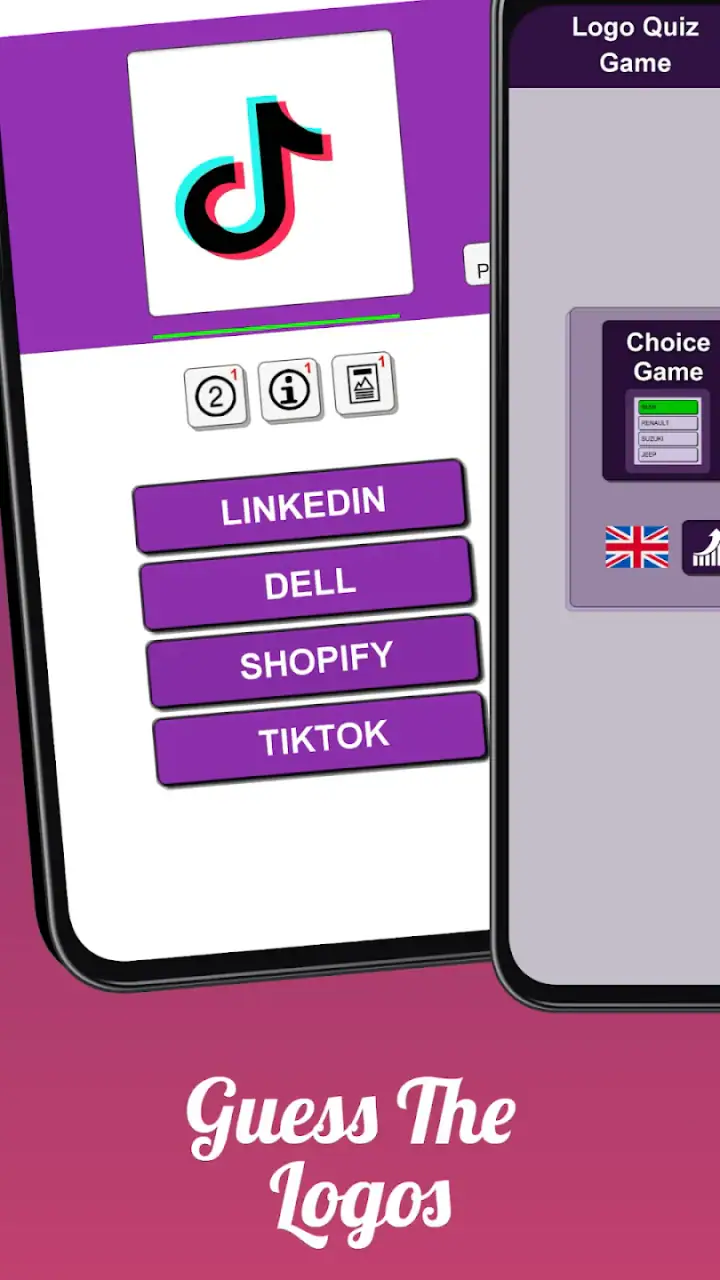
The age rating of Everyone makes the concept accessible to a broad audience. Younger players can approach it as a visual memory challenge, while adults may find that the game tests how many brands they recognize from shopping, travel, technology, food, or entertainment. The difficulty naturally depends on personal experience, so a logo that feels obvious to one person may be completely unfamiliar to another.
Small habits that make each round more useful
One habit I found helpful was separating recognition from recall. Recognition happens when the logo looks familiar; recall is the harder step of producing the exact brand name. If I knew the company but could not immediately remember its name, I paused instead of typing the first related word that came to mind. That reduced careless errors and made the successful answers feel more earned.
Another useful approach is to notice what the logo is not. If a design resembles a technology company but lacks the usual lettering or icon style, I mentally remove the closest wrong answer. This process of elimination is more reliable than staring at the image while waiting for inspiration. It is particularly useful when several brands occupy the same visual category.
I also avoid treating every unfamiliar logo as a failure. Some challenges expose gaps in my everyday visual memory rather than testing general knowledge. When I miss one, I try to remember the distinctive feature that separated the correct answer from my guess. That turns the round into a small learning exercise instead of a frustrating dead end.
Settings, pacing, and the best way to use the game
Before settling into longer sessions, I would check the available in-game options and the way the game presents its challenges. The most useful setting-related habit is not to change things constantly. I prefer to establish a comfortable display and input routine, then concentrate on the logos. Frequent adjustments can interrupt the visual focus that makes this type of trivia enjoyable.
Because the game is built around images, screen clarity matters more here than it would in a text-heavy quiz. I play where I can see the logo without glare or distractions, especially when the design contains thin lettering or small details. A bright outdoor setting can make subtle shapes harder to distinguish, while a calm indoor setting lets me compare the whole mark more carefully.
I also pay attention to how quickly I am answering. Speed can be satisfying, but rushing turns a recognition game into a collection of avoidable mistakes. My preferred rhythm is to answer quickly when the logo is unmistakable and slow down for anything that depends on a tiny visual clue. This creates a better balance between momentum and accuracy.
The free entry point is convenient for trying the game without a commitment. At the same time, in-app purchases range from $0.49 to $99.99 per item, so I would approach the purchase area deliberately. Anyone who only wants casual rounds can begin without spending money, while players considering extras should check what they are selecting before confirming a purchase. The wide price range is a reason to keep the game’s optional spending separate from the enjoyment of the basic quiz.
This is one of the places where I think experienced users can protect the quality of the experience. I do not use purchases as a substitute for thinking through a difficult logo. If I am stuck, I first revisit the image, consider the context suggested by its design, and only then decide whether I want assistance. That keeps the central skill—recognizing and remembering brands—from disappearing behind shortcuts.
There is also a practical question about device compatibility. Since the game supports Android 7.0 and later, it can work on many older Android devices, which is helpful for people who keep a reliable phone for casual games. Still, an older device may make image details less comfortable to inspect than a newer screen. The game itself is simple to understand, but the visual nature of the challenge means the display remains part of the experience.
How I approach difficult logos without guessing blindly
When a logo is unfamiliar, I divide the image into layers. I look at the outer shape first, then the internal symbol, then any lettering or unusual color relationship. This is more effective than trying to absorb the entire design at once. A logo may look generic from a distance but reveal a distinctive angle, spacing choice, or emblem when examined in parts.
I also use category clues carefully. A logo with a clean geometric appearance may suggest technology or finance, while a playful illustration may point toward food, retail, or entertainment. These clues are not answers by themselves, but they narrow the mental search. The important trade-off is avoiding overconfidence: visual style can suggest a category while still leading to the wrong brand.
Another repeatable method is to say possible answers quietly before entering one. Hearing the options in my own words exposes when I am confusing a company with one of its products, or when I remember a slogan but not the actual brand. That distinction matters in a logo quiz because the image may represent a parent company, a service, or a product family rather than the first name that comes to mind.
For group play, I would give each person a fixed amount of thinking time and ask them to explain the clue they noticed. This keeps the activity from becoming a loud guessing contest and makes wrong answers useful. Someone may recognize the color while another person remembers the shape, and together they can reach the answer more methodically.
Where the game is strong—and where its limits show
The strongest part of Logo Quiz: Guess The Logo Game is its low barrier to entry. I do not need to learn controls, manage a character, or remember a complicated ruleset. The entire appeal is visible almost immediately, and the short challenges make it easy to stop without feeling that I have abandoned a larger mission.
It also has a different feel from a general knowledge quiz. Traditional trivia often depends on facts, dates, geography, or language. This game leans more heavily on visual memory and exposure to commercial design. That makes it a good alternative when I want a quiz that tests what I notice in daily life rather than what I studied.
However, the same focus can limit its appeal. If I am not interested in brands, advertising, or visual recognition, the questions may feel narrow. A person looking for wordplay, science questions, history, or broad cultural trivia would probably get more variety from a conventional trivia app. This game is best when its specific subject feels like a feature, not a restriction.
Difficulty can also be personal in a way that is not always predictable. Someone who regularly shops or travels may recognize a logo instantly, while another player may find the same challenge obscure. That means progress is tied partly to personal exposure, not only to reasoning skill. I see this as an honest limitation of the format, and it is worth knowing before downloading.
The purchase structure is another point to consider. Free access makes experimentation easy, but the presence of optional items means the game may not suit someone who wants a completely purchase-free environment. I would recommend it to players who are comfortable ignoring optional spending unless they have a clear reason to use it.
Compared with a standard trivia alternative, this title is more focused and visually immediate. Compared with a broad quiz collection, it offers less subject variety but a clearer identity. I would choose it for short recognition sessions, family guessing, or a simple test of brand memory. I would choose another app when I want long-form progression, detailed explanations, or questions across many academic subjects.
What experienced players should not expect
After getting comfortable with the basic routine, it is tempting to search for a deeper system underneath the logo challenges. In my experience, the lasting challenge comes from improving observation and memory rather than mastering a complex strategy layer. Settings and pacing can make the experience smoother, but they do not transform it into a different genre.
That is important for expectations. The game can reward a repeatable method, but it does not replace broad familiarity with brands. If I already know most of the logos presented, sessions may become more about speed than discovery. If I know very few of them, progress may feel dependent on learning names rather than solving visual puzzles.
I also would not use it as a serious measure of intelligence. A missed logo may simply reflect an unfamiliar market, a different age group, or a lack of interest in a particular industry. The most productive mindset is curiosity: notice why the design was difficult, remember the answer, and see whether it becomes recognizable later.
For parents or teachers considering it as a casual activity, the Everyone rating is reassuring, but the subject matter still centers on commercial logos. It can support conversations about visual identity and memory, yet it is not an educational curriculum. I would use it as a light supplementary activity rather than expecting structured lessons.
My verdict after building a repeatable routine
I see Logo Quiz: Guess The Logo Game as a focused, approachable trivia title that succeeds because it does not overcomplicate its central idea. I can open it, inspect a logo, make a reasoned guess, and move on. That straightforward loop is exactly why it works for short breaks and informal challenges with friends or family.
The best way to enjoy it is to use a few simple habits: study the whole design before focusing on one clue, separate recognition from recalling the exact name, slow down when similar brands compete for attention, and treat missed answers as memory notes rather than personal failures. These habits make the game more satisfying without pretending that it contains a deeper strategy system.
I would recommend it to anyone who enjoys brand recognition, visual puzzles, and quick rounds that can fit around a busy day. It is also a good starting point for someone who wants a free game with an Everyone rating and an uncomplicated learning curve. The strong average rating and large install base suggest that this focused format has found an audience, but personal interest in logos remains the deciding factor.
I would skip it if I need varied academic trivia, detailed answer explanations, competitive multiplayer, or a long campaign with a story. I would also think twice if optional purchases are likely to distract me from the quiz itself. For those users, a broader trivia alternative may offer more lasting variety.
For me, the final appeal is its balance of instant access and small moments of concentration. It is not trying to be a complete entertainment platform, and that narrow purpose is a strength. Logo Quiz: Guess The Logo Game is at its best when I use it as a quick visual workout, not as a game I need to grind. If that sounds like the kind of challenge you want, Pipi Chick Studio’s game is worth trying for free and judging by how naturally its logo-based routine fits your own memory.
FAQs for Logo Quiz: Guess The Logo Game
What is Logo Quiz: Guess The Logo Game?
Logo Quiz: Guess The Logo Game is a casual trivia app in which you identify company, product, sports, entertainment, and brand logos from partially revealed images. The game is designed for short play sessions, but its level-based format can also keep you engaged for longer. It combines visual memory, general knowledge, and simple word input rather than requiring complicated controls.
How does the gameplay work?
Each round presents a logo with some details hidden, blurred, or removed, and your task is to recognize it and enter the correct name. As you progress, the logos generally become less obvious, so familiarity with brands and attention to small visual clues become increasingly important. Depending on the version, hints may be available when you are stuck, although using them can reduce the challenge or consume in-game resources.
Is Logo Quiz: Guess The Logo Game free to download and play?
The game is generally available as a free download, allowing you to try its main quiz content without paying upfront. However, free versions of logo quiz apps may include advertising, optional purchases, or paid hint systems. Before downloading, check the current store listing for details about ads, in-app purchases, supported devices, and whether any features or additional level packs require payment.
Can I play the game offline?
Many logo quiz rounds can often be played without a constant internet connection once the necessary game content has been installed. Offline availability may vary according to the app version, device, and specific features. Advertisements, updates, leaderboards, cloud synchronization, or certain bonus modes may still require internet access, so it is worth testing the game offline rather than assuming every function will work without a connection.
Is Logo Quiz: Guess The Logo Game suitable for children and families?
The straightforward controls and recognizable imagery make Logo Quiz: Guess The Logo Game suitable for casual family play, especially for users who enjoy trivia and visual puzzles. Nevertheless, the difficulty depends on the logos included, and some brands may be unfamiliar to younger players. Parents should also review the app’s advertising, privacy information, and in-app purchase settings before allowing children to play independently.
Pros
- Simple gameplay that is easy to understand from the first round.
- Large variety of brands keeps the quiz feeling fresh.
- Short levels make it convenient for quick gaming sessions.
- Hints help players progress when a logo is difficult to recognize.
- Improves visual memory and familiarity with popular brand symbols.
Cons
- Some logos may be too region-specific for players in certain countries.
- Repeated exposure to similar logos can make later levels feel predictable.
- Progress may depend heavily on using hints for obscure brands.
- Ads can interrupt the flow between rounds or after completing levels.
- Players looking for strategy or action may find the gameplay too basic.


